News
by
CareBestie
Three weeks, three signals from the field. What HomeCare 100, Elara Caring, and Home Health Care News are telling us about where the industry is heading, and what it means for agencies still deciding.
There's a particular kind of validation that product milestones can't give you. It doesn't come from signing a contract or shipping a feature. It comes from the field, from peers, from press, from the practitioners who've seen every technology wave come through this industry and learned to be skeptical of all of them.
In the span of a few weeks, three things happened that we didn't engineer. They happened because the conversation in home health has shifted and the people closest to care delivery are driving it.
We want to share what they signal, because they don't just reflect on CareBestie. They reflect on where the entire sector is going.
The most important vote isn't on a panel
HomeCare 100 is not a trade show. It's a deliberately small gathering, the executives who run home health and hospice at scale, the people with enough scar tissue to know what doesn't work. Getting in front of them is difficult. Getting their vote is something else entirely.
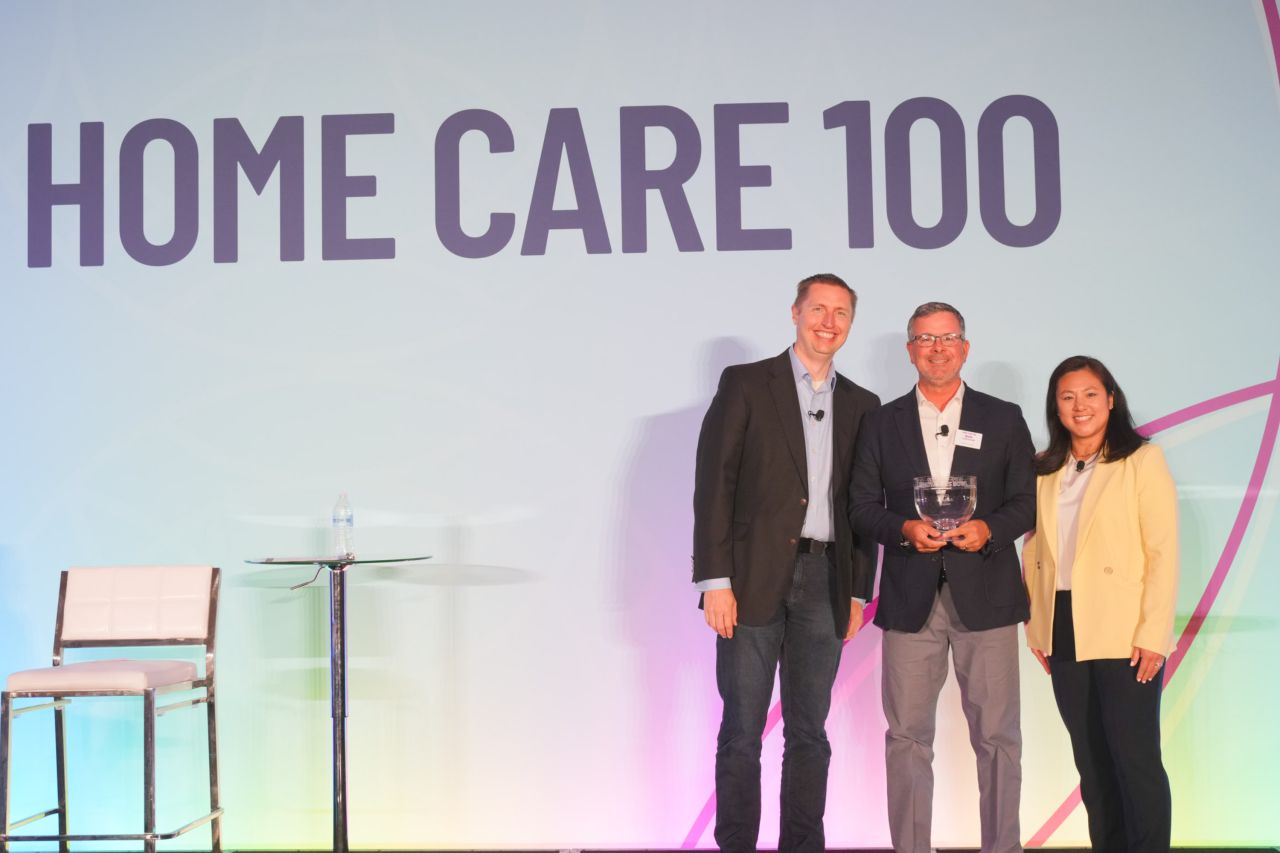
CareBestie received the Audience Award. Not from a judging committee. Not from a sponsor. From the operators in the room.
Peer validation in home health is hard-won and rarely performative. An audience of operators voting for an AI solution means they saw something operationally credible - not a demo, not a pitch, but a real answer to a problem they wake up with every day.
What the award tells us isn't that CareBestie "won." It's that patient engagement, and care coordination are problems this industry has decided to solve, and that operators are actively looking for partners who understand the clinical and operational constraints of doing it right.
What good AI adoption actually looks like
Elara Caring is one of the largest home health and hospice providers in the country: tens of thousands of patients, hundreds of locations, a workforce navigating one of the most demanding care environments in healthcare. When they talk about implementing voice AI, people in this industry listen.
What made their presentation unusual wasn't the results. It was the honesty about where they started, and why they were hesitant.
"We wanted to lean into this - but we were also hesitant, because it touches one of our most valuable assets: our patients."
- Elara Caring leadership, on the decision to adopt conversational AI for wellness calls
That hesitancy is worth sitting with. Elara didn't adopt AI because it was a trend. They adopted it because their staff were hitting a hard ceiling: limited time to call, low connectivity rates, patients not picking up, outreach tracked across multiple systems, and any staffing disruption compressing capacity further. The AI wasn't replacing care, it was absorbing the volume that was already going unmet.
Their evaluation process was rigorous. Compliance and PHI data requirements came first because, as they noted, not every vendor in the market today can meet those requirements. Configurable voice model, SMS pre-notification, branded phone numbers to avoid spam flags, existing infrastructure partnerships that enabled a sub-two-month implementation. These weren't nice-to-haves. They were the minimum bar.
The numbers from Elara's deployment
After the 3rd outreach attempt: more than 50% patient connectivity.
Within the last 30 days: 70% connectivity rate.
Opt-out rate (patients requesting a human instead): under 15%.
Care needs identification improvement: more than 2x.
Implementation timeline: under 2 months.
The 15% opt-out figure is the one that surprised most people in the room. Less than one in six patients refused to engage with the AI agent and asked for a human call instead. Elara's read: patients are ready. The hesitancy, it turns out, was on the provider side, not the patient side.
They also identified something they called "low engagers" - patients who pick up and answer, but only in yes/no responses. Rather than treating that as success, Elara built a separate follow-up queue for those patients to ensure care needs weren't slipping through. That kind of operational nuance - building exceptions into the workflow before the exceptions become problems - is what separates a pilot from a program.
"Our clinicians love this. They feel more informed when they're calling patients to follow up because they can go back to the transcript, go back to the call. The AI agent flags where in the conversation, what the context was that led to the escalation."
- Elara Caring, on clinician response to AI-assisted patient outreach
The last thing Elara said before closing: they still need humans. They're not automating care. They're freeing their clinical staff to focus on the follow-up and escalation work that actually requires human judgment. That framing - AI as capacity, not replacement - is the only one that lands with home health clinicians. And it's the only one worth building toward.
When the trade press shifts its frame
Home Health Care News is where the policy-aware, payer-literate, operationally sophisticated part of this industry goes to read. Being featured there means the argument you're making is considered worth hearing by an audience that has heard most arguments before.
The framing of that feature matters more than the placement. The conversation wasn't about what AI can theoretically do for home health. It was about what responsible AI adoption requires, the governance questions, the staff questions, the data questions that agencies need to answer before they go live with any AI system.
When a trade publication starts covering AI in home health through the lens of implementation quality rather than capability promises, the sector's maturity is signaling itself.
Read the full Home Health Care News feature →
The agencies that will lead the next phase of home health aren't waiting for AI to be proven. They're building the internal capacity to evaluate, adopt, and scale it well. That's the real shift these three moments point to.
For agencies still in the evaluation phase: the question is no longer whether AI belongs in home health. It's which use cases to start with, which partners to trust, and how to build staff confidence in parallel with operational adoption.
Those are questions we spend most of our time on. We're happy to share what we've learned, from Elara, from our broader client base, and from the honest conversations we've had with agencies that decided we weren't the right fit yet.
If you're evaluating how AI fits into your agency's operations, we're open to a conversation.
Typically 30 minutes. We come prepared with what's relevant to your agency's size and use case.